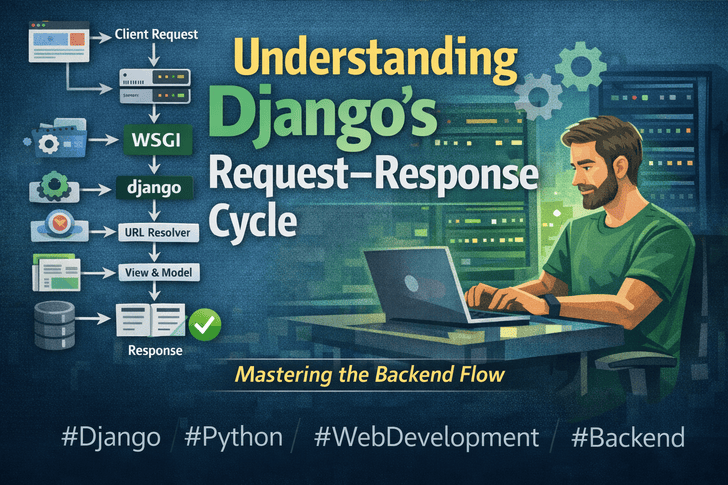
Django is one of the most popular Python web frameworks, powering thousands of websites worldwide. Many developers use it daily, but few truly understand what happens under the hood when a client makes a request. Understanding the request–response cycle is crucial if you want to debug effectively, optimize performance, and design scalable systems.
In this article, we’ll break down the Django request–response lifecycle step by step, with examples, so you can see what really happens behind the scenes.
The Django Request–Response Lifecycle: Step by Step
When a user visits a Django-powered site, the journey from request to response involves multiple layers. Here’s a simplified flow:
1️⃣ Client Sends a Request
A user’s browser sends an HTTP request to your server. This could be a request for a page, an API endpoint, or a static file.