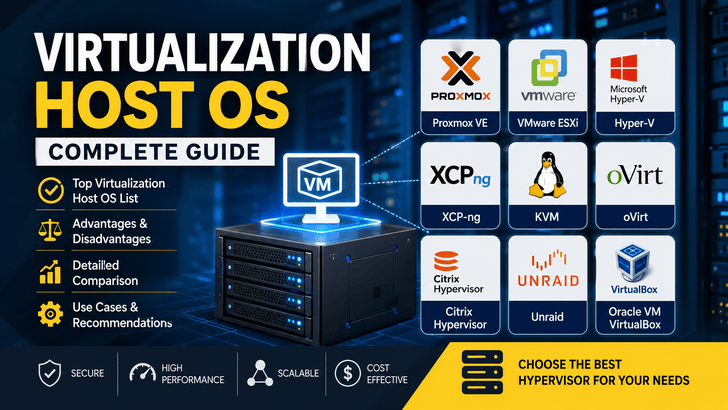
Virtualization has become a core building block of modern infrastructure—powering cloud platforms, SaaS products, hosting environments, and internal enterprise systems. At the heart of virtualization lies the Virtualization Host Operating System, commonly known as a hypervisor.
This article provides a detailed overview of the most popular virtualization host OS options, including their advantages, disadvantages, and when to use each.
🧩 What is a Virtualization Host OS?
A Virtualization Host OS (or hypervisor) is software that allows a single physical machine (server) to run multiple isolated virtual machines (VMs). Each VM behaves like an independent computer with its own OS and applications.