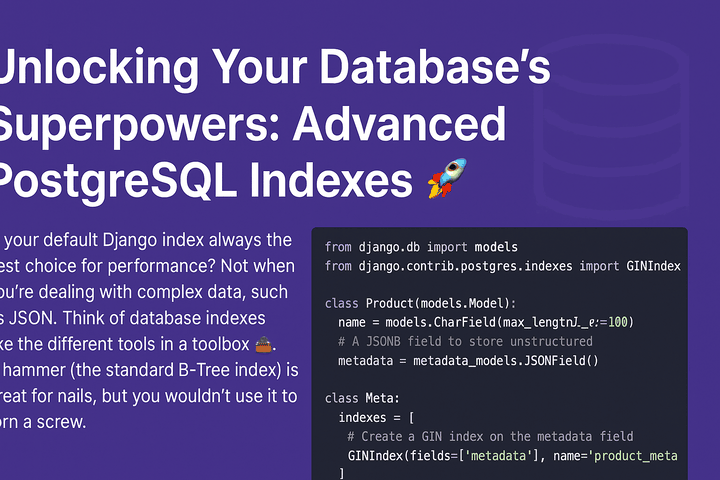
When building applications with Django and PostgreSQL, performance often comes down to how efficiently your database can fetch the right data. By default, Django creates B-Tree indexes, which are fantastic for simple equality and range queries. But when working with complex data types like JSON, arrays, or text search, a plain B-Tree may not cut it.
This is where PostgreSQL’s specialized indexes shine. Think of them as different tools in a toolbox 🧰:
B-Tree: The hammer — reliable and versatile, great for equality (
=) and range checks (>,<).GIN (Generalized Inverted Index): The screwdriver — designed for searching inside complex structures like JSON, arrays, and full-text documents.
Why Specialized Indexes Matter
Imagine you’re storing unstructured metadata about products in a JSONField. A typical query might look like:
Product.objects.filter(metadata__brand="TechCorp")